.jpeg?width=50&name=Media%20(4).jpeg)
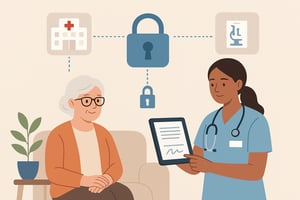
In home healthcare, communication is everything. Caregivers share updates with hospitals, send lab...
How Zero Trust Protects Mobile Care Teams Working Across Multiple Locations
As home healthcare continues to shift toward mobile and remote service delivery, cybersecurity risks are rising just as quickly. Caregivers now log in from different patient homes, use various WiFi networks, and rely heavily on mobile devices to access schedules and patient records. This level of mobility increases exposure, and traditional security models are no longer enough.This is where Zero Trust becomes essential.
What Zero Trust Means for Home Healthcare
Zero Trust operates on one simple principle: trust nothing by default—always verify. Instead of assuming a login, device, or network is safe, Zero Trust continuously checks:
- Who is accessing the system
- Whether the device is secure
- Whether the user should access that specific patient data
- Whether the behavior looks normal
This approach is perfectly suited for mobile care environments where caregivers work far beyond the walls of a clinic.
How Zero Trust Protects Care Teams in the Field
- Secure access from any home or network: Caregivers often document care from patients’ living rooms. Zero Trust ensures identity verification, device checks, and encrypted connections, no matter the WiFi quality.
- Protection from lost or stolen devices: With Zero Trust, PHI remains protected even if a phone or tablet goes missing. Encryption, multi-factor authentication, and remote wipe capabilities reduce breach risks dramatically.
- Stops threats using stolen credentials: If a cybercriminal tries to log in using a caregiver’s username and password, Zero Trust detects unusual behavior and blocks access automatically.
- Limits access to only what is necessary: Caregivers, schedulers, and billing staff get access only to the information required for their roles, reducing the risk of insider or accidental exposure.
- Better visibility for agency IT teams: Zero Trust gives agencies insight into every login, device, and data access request, making it easier to detect abnormal activity and respond quickly.
Why Agencies Need Zero Trust Now
Mobile care has expanded but so have threats targeting home healthcare. From insecure home WiFi to phishing attacks and stolen devices, risks follow caregivers everywhere they work. Zero Trust provides a modern, layered defense that keeps PHI safe while allowing teams to work efficiently across multiple locations.
Adopting Zero Trust is no longer a future goal: it’s a critical step in protecting today’s mobile home healthcare workforce.
Final Thoughts
Home healthcare is built on mobility, compassion, and trust. But when it comes to cybersecurity, the safest approach is simple: Trust no one. Verify everyone. Protect everything.
Zero Trust allows caregivers to deliver excellent care from any home, any network, and any device without compromising security.
If your agency wants to build a secure, modern, and resilient mobile care environment, Zero Trust is no longer optional. It’s the new foundation for safe, compliant, and confident home-based care.